Latest News
- Songshan Lake Exhibition and Performance Center by ZHA
- Inaura Mixed-Use Complex, Dubai
- Huafa Snow World, China
- Shenzhen Galaxy Twin Towers, China
- Dar al Funoon by Frank Gehry
- Casa Sud Train Station, Casablanca
- Dingzhou Cultural and Sports Center,China
- Cloud 11 Creative Hub, Thailand
- XPENG Headquarters, China
- Shanghai West Bund AI Towers, China
Tel: (+98 21) 26 20 55 20
Fax:(+98 21) 26 20 55 19
info@arcrealestate.ir

Science and Technology Museum of Henan, China
The New Science and Technology Museum of Henan Province draws inspiration from the "Heluo Culture", resembling a natural shape formed by the confluence of the Yellow River and the Luo River, with a grand and relaxed atmosphere. New Science and Technology Museum of Henan Province integrates the Science Museum, the Nature Museum, and the Astronomy Museum. It is the largest and most heavily invested public project in the province, and one of the largest science and technology museums in China.
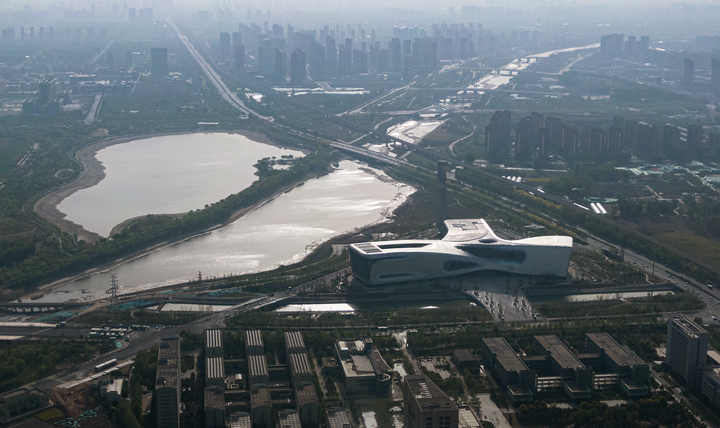
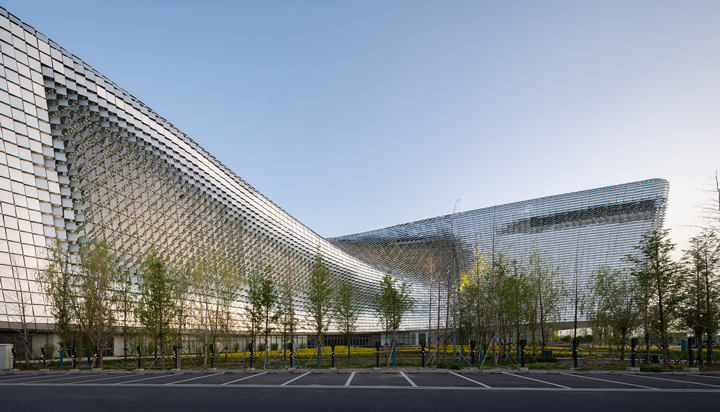

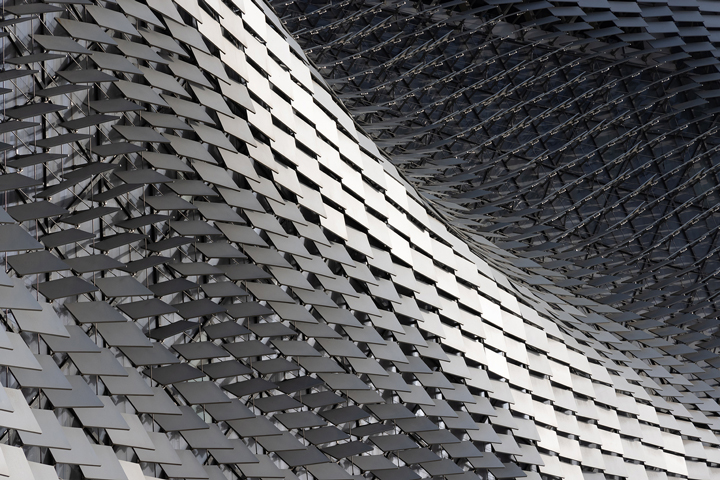

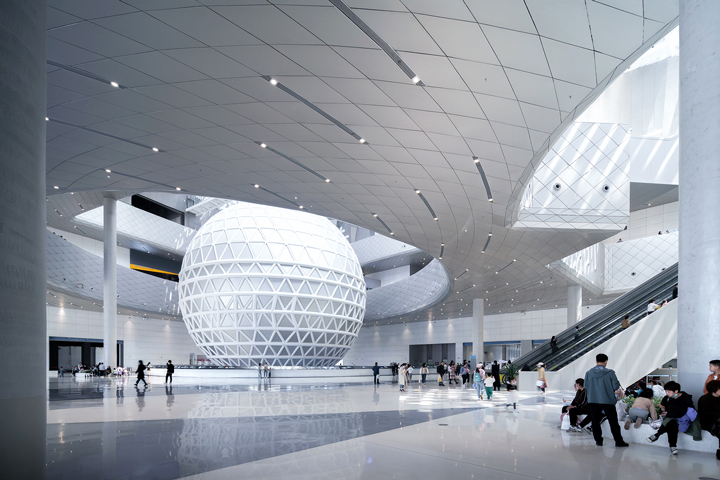
Sited within a triangular and complex urban fabric, the project adopts a trident fractal layout to align with prevailing wind directions. The double-layer aluminum façade, generated parametrically, forms a fish-scale-like freeform surface, while a steel frame with 80-meter truss bridges resolves the challenges of torsional structures. At its heart lies a vast 3,000-square-meter central atrium, where triple-floor huge span steel truss skybridge and interwoven public platforms generate a dynamic, orbital-like system. The spherical cinema—China's largest indoor full-dome theater—serves as the striking focal point of this space.
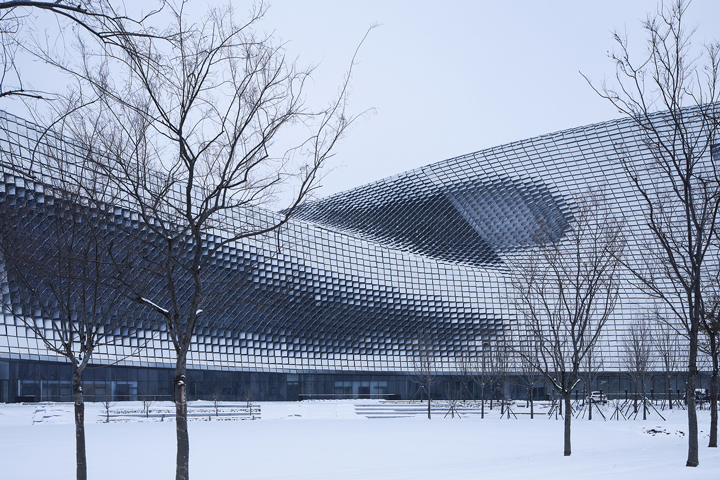
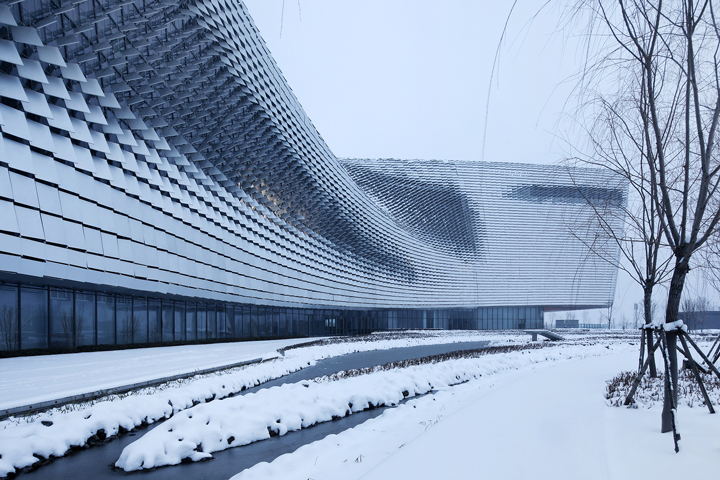
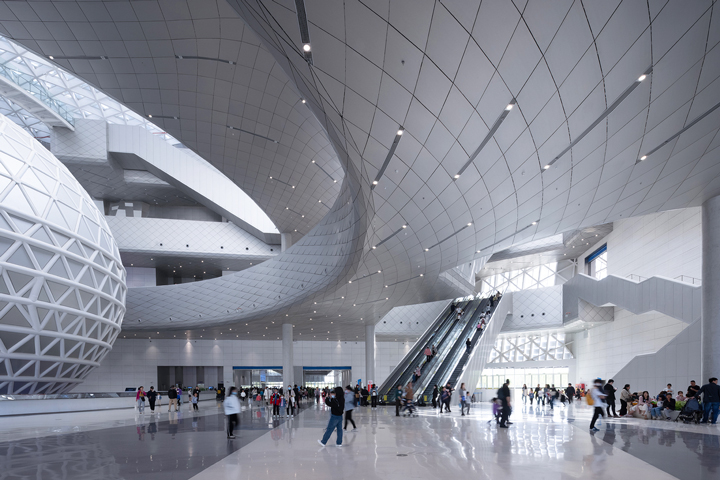


The complex consists of the main building and an underground garage, with nearly 20 large exhibition halls themed around "Nature, Astronomy, and Intelligence" radiating from the atrium's three wings. Guided by the principle of "form follows flow," the architecture employs parametric simulations and wind tunnel testing to refine its form and façade. Conceived as a prototype of "environmental intelligent construction," the building harnesses wind flows and composite spatial forms to achieve efficient environmental control with less material and energy, meeting the three-star standard of The Green Building Evaluation Label.


References:

